


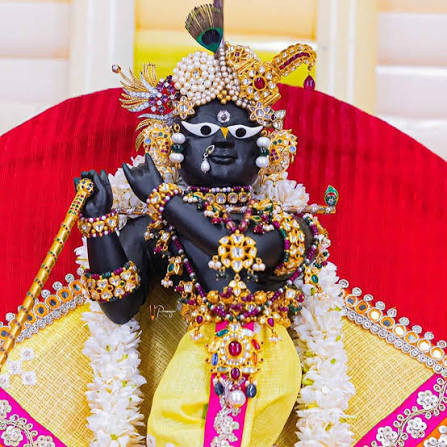
Radha Raman Temple
Temple History
The Shri Radha Raman Temple in Vrindavan, founded in 1542 CE by Shri Gopal Bhatta Goswami, is centered around a revered self-manifested (swayambhu) deity of Lord Krishna that emerged from a sacred Shaligram stone. Unlike many primary deities in the region that were relocated to Rajasthan to escape Mughal persecution under Aurangzeb, Radha Raman Ji notably remained in Vrindavan. The temple is also famous for its unbroken 500-year-old kitchen fire (Nitya Agni), which continues to burn without modern ignition to prepare daily offerings.
Temple Significance
piritual & Cultural Significance of the Radha Raman Temple
-
Heart of Gaudiya Vaishnavism: Founded by Shri Gopal Bhatta Goswami, the temple is one of the Saptdevalaya (seven principal temples) established by the Six Goswamis of Vrindavan, making it a cornerstone of the Gaudiya Vaishnava tradition.
-
Radha-Krishna Unity: Unlike many temples where separate idols of Radha and Krishna are worshipped, the Radha Raman Temple features a unique saligram shila alongside the main deity to represent Srimati Radharani, symbolizing the eternal and inseparable union of Radha and Krishna.
-
Symbol of Divine Resilience: Because the deity chose to remain in Vrindavan during the height of Mughal persecution when other sacred images were evacuated to Rajasthan, the temple stands as a powerful emblem of faith, devotion, and spiritual rootedness for devotees in Braj.
Description
he Shri Radha Raman Temple in Vrindavan is one of the most spiritually significant and visually captivating shrines dedicated to Lord Krishna in the Braj region. Constructed in traditional medieval architectural style, the temple complex features a serene, intimate courtyard and a sanctum that radiates a deep sense of medieval devotion.
Unlike most prominent temples where separate deities of Radha and Krishna are placed side-by-side, this temple houses a uniquely revered form of Lord Krishna known as Radha Raman Lal. Because the primary deity is self-manifested (swayambhu) from a sacred Shaligram stone, it possesses remarkably lifelike, delicate features—including gentle facial expressions, soft contours, and even visible teeth—while portions of the original sacred stone remain visible on its reverse. To symbolize the eternal divine union, a sacred Shaligram shila representing Srimati Radharani is placed right beside the main deity.
The atmosphere inside the temple is deeply immersive, characterized by traditional daily rituals, classical devotional singing (kirtan), and the preservation of ancient practices, such as the 500-year-old temple kitchen fire (Nitya Agni) that burns continuously to prepare daily offerings.
Temple Timings
Radha Raman Temple Morning Opening Time
05:00 AM - 12:30 PM
Radha Raman Temple Evening Opening Time
06:00 AM - 09:30 AM
Radha Raman Temple Morning Arti Time
05:00 AM
Radha Raman Temple Evening Arti Time
06:00 AM