

Radha Shyam Sundar Temple
Temple History
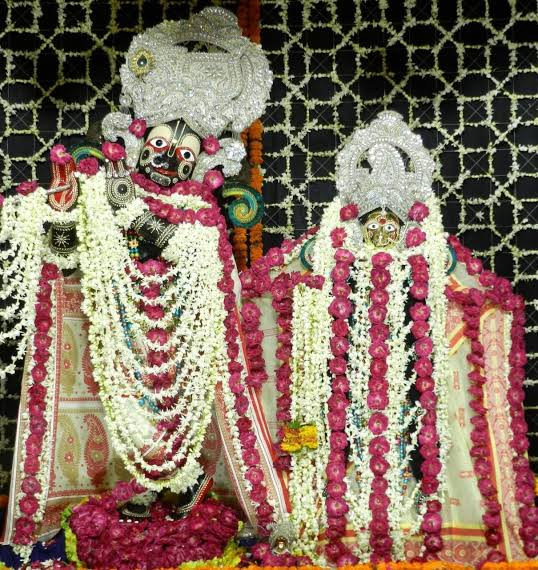
adha Shyamsundar Temple, situated near Seva Kunj in Vrindavan, was established in 1578 AD by Srila Shyamananda Pandit (originally named Dukhi Krishnadas) and stands as one of the revered Sapt Devalaya (seven principal ancient temples) of the Gaudiya Vaishnava tradition. According to temple history, while humbly sweeping the groves of Seva Kunj, Dukhi Krishnadas discovered a precious golden anklet (nupur) belonging to Goddess Radha, which she had dropped during the Rasa Lila. Recognizing his selfless devotion, Goddess Radha revealed herself, pressed the anklet onto his forehead—bestowing the distinctive Shyamanandi Tilak (or Nupur Tilak)—and renamed him Shyamananda. In a miraculous gesture of divine grace, Goddess Radha then manifested the central deity of Shri Shyamsundar Ji (Lalaji) directly from her own lotus heart and entrusted Him to Shyamananda Pandit. Over the centuries, the temple complex expanded, and in 1719 AD, the revered Gaudiya scholar Srila Baladeva Vidyabhushana installed larger deities of Shri Radha-Shyamsundar at the central altar to facilitate elaborate shringar (dressing) rituals. Today, the temple preserves three distinct sets of historic deities, Shyamananda Pandit's original bhajan kutir (meditation cave), and a legacy of uninterrupted devotional traditions.
Temple Significance
The spiritual and cultural significance of the Shri Radha Shyamsundar Temple stems from its unique divine origin and its revered position within the Gaudiya Vaishnava tradition:
-
Direct Manifestation from Radha's Heart: The presiding deity, Shri Shyamsundar Ji (Lalaji), holds the distinction of being traditionally revered as the only deity in Vrindavan that manifested directly from the lotus heart of Srimati Radharani Herself.
-
The Divine Gift of the Nupur Tilak: The temple's founding is intertwined with the deep humility and selfless service of Srila Shyamananda Pandit. Finding Goddess Radha's golden anklet (nupur) while sweeping Seva Kunj earned him a personal appearance by Radha and the blessing of the Shyamanandi Tilak on his forehead—a unique foot-shaped mark worn by followers of the sampradaya to this day.
-
One of the Sapt Devalaya: As one of the seven principal ancient temples (Sapt Devalaya) established in Vrindavan during the 16th century, it represents a foundational pillar of the Gaudiya Vaishnava renaissance led by the followers of Sri Chaitanya Mahaprabhu.
-
Seat of Scholarly Heritage: The temple holds immense historical weight for housing deities worshipped and served by Srila Baladeva Vidyabhushana, the brilliant 18th-century scholar who famously composed the Govinda Bhasha commentary on the Vedanta Sutra.
Description
Established in 1578 AD by Srila Shyamananda Pandit, the is one of the seven principal ancient temples (Sapt Devalaya) of the Gaudiya Vaishnava tradition. Located near Seva Kunj, the temple is renowned for its presiding deity, Shri Shyamsundar Ji, which is traditionally believed to have miraculously manifested directly from the lotus heart of Srimati Radharani after the saint discovered Her golden anklet (nupur) during his service. Reviewers and visitors frequently highlight the peaceful, deeply spiritual atmosphere, the preservation of historical artifacts such as Srila Shyamananda's original bhajan kutir, and the devotional heritage maintained within the temple complex.
Temple Timings
Radha Shyam Sundar Temple Morning Opening Time
04:00 AM - 12:00 PM
Radha Shyam Sundar Temple Evening Opening Time
04:15 AM - 09:15 AM
Radha Shyam Sundar Temple Morning Arti Time
05:00 AM
Radha Shyam Sundar Temple Evening Arti Time
06:00 AM