


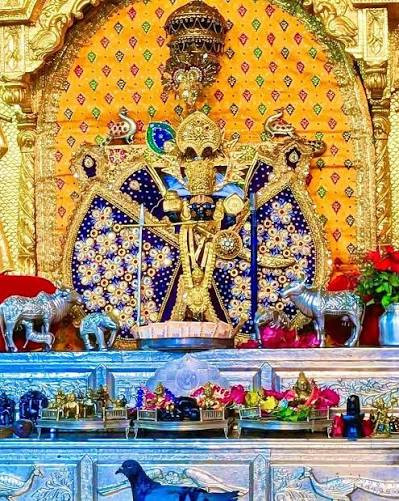
Shree Sanwaliya Seth Mandir

Mandphiya, Rajasthan

5.0 Rating

Temple History

The miraculous history of the world-renowned Shree Sanwariya Seth Mandir dates back to the year 1840 AD and is deeply rooted in local folklore, divine visions, and an incredible connection to the mystical 16th-century poet-saint, Meera Bai. According to temple traditions, the three dark black stone (Shyam) idols of Lord Krishna originally belonged to Meera Bai, who worshipped them daily as her beloved Girdhar Gopal. Following her departure from the Mewar region, the sacred idols came into the care of a saint named Dayaram Ji. During the chaotic periods of religious invasions, Saint Dayaram buried the idols underground beneath a massive banyan tree in the open plains of the Bhadsoda-Bagund area to protect them from defacement, and over time, the exact location was forgotten as the saint passed away.
Centuries later, a local milkman and cowherd named Bholaram Gurjar began having recurring, vivid dreams in which Lord Krishna revealed that his divine forms were buried under the ground at a precise spot in Chapar village. Bholaram shared his dream with the village elders, prompting the community to gather and dig at the designated spot, where they astonishingly unearthed three identical, exceptionally beautiful idols of Lord Krishna. The largest idol was taken to Bhadsora village to form the Shri Sanwariya Seth Ancient Temple, the medium-sized idol was brought to Mandphiya village by the village head to become the grand primary shrine of Shree Sanwaliya Seth Dham, and the third idol remained exactly where it was dug up in Bagund, which is now enshrined as the Shri Sanwaliyaji Seth Prakatya Mandir.
What truly sets the history of Sanwariya Seth apart from almost any other Hindu temple is its transition into a legendary "Temple of Miracles" for merchants, traders, and businessmen. Historically, local merchants who suffered heavy losses or sought prosperity began praying to the deity, promising him a direct partnership in their trade. Over the generations, this grew into a massive tradition where thousands of entrepreneurs across India treat Sanwariya Seth as a legal commercial partner, voluntarily dedicating anywhere from 10% to 50% of their actual business profits directly to the temple. This unique merchant history is why the temple's donation chests consistently draw national attention, collecting tens of crores of rupees in cash, gold, and silver during every single counting cycle, which the temple trust now uses to fund massive social welfare, free food kitchens, and medical facilities.

Temple Significance

The Shree Sanwariya Seth Mandir holds immense spiritual and cultural significance based on three core pillars:
  • The Divine Business Partner: Known as the "Seth of Seths," Lord Krishna is treated as an active financial partner by thousands of merchants and entrepreneurs. Devotees voluntarily pledge a fixed share (10% to 50%) of their business profits to the temple to ensure commercial prosperity and ethical success.
  • Unrivaled Philanthropy: As one of Northern India's wealthiest shrines, it receives tens of crores in cash, gold, and silver monthly. The temple trust transforms these offerings into massive social welfare, running free mega-kitchens, charitable hospitals, and schools.
  • The Meera Bai Connection: Spiritually, the dark stone idols are deeply revered as the original deities worshipped by the legendary 16th-century poet-saint Meera Bai, making the temple a major holy site for the Bhakti movement.

Description

Shree Sanwariya Seth Mandir is highly significant as a supreme place of wish-fulfillment where Lord Krishna is uniquely worshipped as the "Divine Business Partner". Thousands of merchants and entrepreneurs across India pledge a fixed share (10% to 50%) of their actual commercial profits to the deity to ensure prosperity and protection from financial loss. Consequently, it stands as one of Northern India's wealthiest shrines, transforming these massive donations into extensive public welfare, including free medical facilities, schools, and mega-kitchens. Furthermore, the temple holds immense spiritual value because its sacred dark-stone idols are deeply revered as the original deities personally worshipped by the legendary 16th-century poet-saint Meera Bai.

Temple Timings

Shree Sanwaliya Seth Mandir Morning Opening Time

05:30 AM - 12:00 PM

Shree Sanwaliya Seth Mandir Evening Opening Time

02:30 AM - 11:00 AM

Shree Sanwaliya Seth Mandir Morning Arti Time

08:00 AM

Shree Sanwaliya Seth Mandir Evening Arti Time

07:30 AM
YOUR CART
Chat with Astrologer Call with Astrologer